






ELLIS Institute Finland (external link)
ELLIS Institute Finland is a world-class research hub in AI and machine learning and part of the European Laboratory for Learning and Intelligent Systems (ELLIS).

The first year we have been in startup mode. That means brainstorming new big initiatives, setting up how we operate in the institute’s day-to-day, and of course recruiting the people who will do the work. I’m very happy that we have managed to hire 10 outstanding rising stars and leading scholars in artificial intelligence (AI) and machine learning (ML), who have joined both the ELLIS Institute and started as professors at six universities across Finland. The institute’s goal is to have about 200 new people total within a few years, and we are well on our way to that, with more rounds of postdoctoral and principal investigator recruitment ongoing. And we have held events to raise our profile and grow the ecosystem around the institute – and of course to speak about the actual research. The year has been busy and productive.
At the institute we are aiming for blue-sky thinking in our research agenda – high ambition and high impact. With a small number of sharp research moonshots, we aim to pool the existing and new AI expertise at the institute, to collaboratively tackle complex challenges and produce concrete results. The first, AI for health, is an area where our researchers can make a big mark with local data and computational resources. Finland’s health registry data is unique in the world, and we are building the tools to harness it for predicting treatment and prevention outcomes, healthcare resource allocation, drug design and several other applications of strategic importance. This is a key initiative where AI development can contribute real solutions to societal challenges. We have great collaborators for this work at the Institute for Molecular Medicine Finland (FIMM) and Helsinki Institute of Life Science (HiLIFE) at the University of Helsinki.
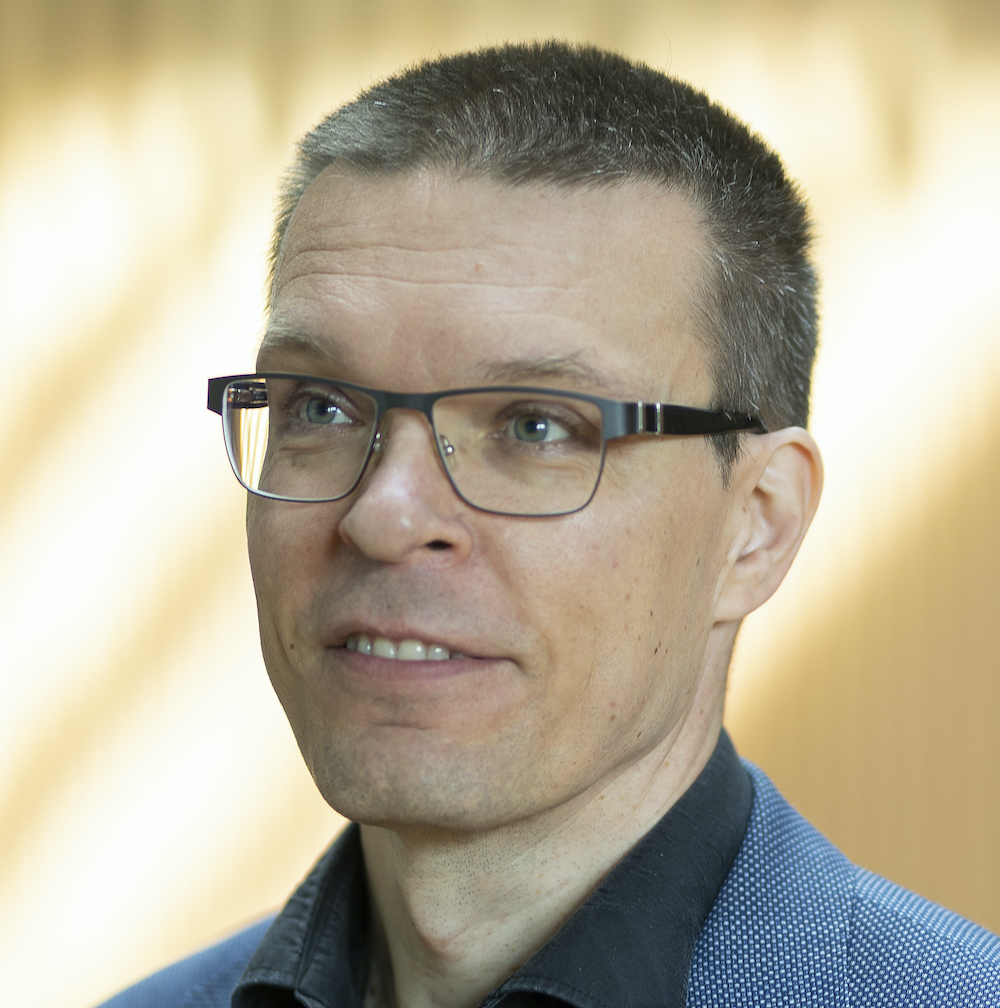
Samuel KaskiWe are going to build the world’s first nationwide healthcare foundation model
Foundation models are exactly these kinds of models – AI systems that have been trained on large amounts of data at scale, that can be used for lots of different applications, from chatbots to image and text synthesis. We are going to build the world’s first nationwide healthcare foundation model that can support real-time clinical decision-making, target preventative measures and conduct population-level ‘what-if’ analyses. The model will be delivered through secure virtual laboratories, which are platforms that combine human expertise with simulations. A model that can predict disease onset and progression, patterns of medication use, and laboratory measurement trajectories can help reduce unnecessary care, support evidence-based health policy and innovation and really accelerate medical research.
A guiding thought behind ELLIS Institute Finland is that it should bring experts, companies and investments together in a new and productive way. We are working on what I call the fundamentals of applied AI, bringing reinforcement learning or generative modeling out of the laboratory bubble and maturing these technologies so they are widely usable and deployable in the real world, for industry or other domains. We are working particularly on R&D processes and think that our approach can lead to a revolution for how R&D is done. The transformation of basic research into AI applications is best done in partnerships with companies. There is a clear bottleneck in AI expertise being rolled out in companies, and we think we have a solution. The institute is interested in working with partners on healthtech, RDI challenges, human-AI interaction and data privacy and security, to name just a few areas. We are already negotiating and launching these collaborations with several companies and can still fit some more.
2025 was a groundbreaking year for the visibility and growth of this field, and in Finland in particular the various actors and organizations really came together, for example for the AI Summit where ELLIS Institute Finland was formally launched. We are succeeding in attracting and retaining the best international talent, by keeping the ambition level high and ensuring academic freedom. In fact, I think we are entering a scale-up phase with the 45 top-notch research groups we have already assembled, creating a multiplicative effect and a virtuous cycle for AI RDI with transformative potential that can rival the best benchmarks in a few years.
The next big step is working with other research fields to transform how RDI is done across disciplines. Companies in several fields are already planning pioneering work with AI and we can help them gain a competitive edge through joint research labs.
As one of the two first ELLIS Institutes, we have an opportunity and expectation to contribute to how the European AI research and impact strategy develops, and though the global picture is complicated, this is where we can make a significant positive difference for technological sovereignty and impact in Europe. Most importantly, and borrowing from Geoffrey Hinton, I am expecting the biggest outcomes from some graduate student who is deeply suspicious of everything I have said. That person may go on to set up a revolutionary startup or lab, in which the institute will be happy to help if it can.

ELLIS Institute Finland is a world-class research hub in AI and machine learning and part of the European Laboratory for Learning and Intelligent Systems (ELLIS).

Accepted papers from the institute to ICLR and AISTATS conferences in 2026

Basic research in artificial intelligence (AI) doesn’t always generate quick wins or clickbait headlines, but its benefits can be seen throughout society


