




Scientists harness the wind as a tool to move objects

Researchers have developed a technique to move objects around with a jet of wind. The new approach makes it possible to manipulate objects at a distance and could be integrated into robots to give machines ethereal fingers.
‘Airflow or wind is everywhere in our living environment, moving around objects like pollen, pathogens, droplets, seeds and leaves. Wind has also been actively used in industry and in our everyday lives – for example, in leaf blowers to clean leaves. But so far, we can’t control the direction the leaves move – we can only blow them together into a pile,’ says Professor Quan Zhou from Aalto University, who led the study.
The first step in manipulating objects with wind is understanding how objects move in the airflow. To that end, a research team at Aalto University recorded thousands of sample movements in an artificially generated airflow and used these to build templates of how objects move on a surface in a jet of air.
The team’s analysis showed that even though the airflow is generally chaotic, it’s still regular enough to move objects in a controlled way in different directions – even back towards the nozzle blowing out the air.
‘We designed an algorithm that controls the direction of the air nozzle with two motors. The jet of air is blown onto the surface from several meters away and to the side of the object, so the generated airflow field moves the object in the desired direction. The control algorithm repeatedly adjusts the direction of the air nozzle so that the airflow moves the objects along the desired trajectory,’ explains Zhou.
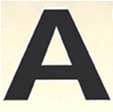
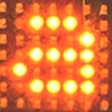
‘Our observations allowed us to use airflow to move objects along different paths, like circles or even complex letter-like paths. Our method is versatile in terms of the object’s shape and material – we can control the movement of objects of almost any shape,’ he continues.
The technology still needs to be refined, but the researchers are optimistic about the untapped potential of their nature-inspired approach. It could be used to collect items that are scattered on a surface, such as pushing debris and waste to collection points. It could also be useful in complex processing tasks where physical contact is impossible, such as handling electrical circuits.
‘We believe that this technique could get even better with a deeper understanding of the characteristics of the airflow field, which is what we’re working on next,’ says Zhou.
The article was published in Advanced Intelligent Systems. DOI: http://doi.org/10.1002/aisy.202400174
Read more news

Nature of Process: Exhibition by the students of the ‘Personal Exploration’ Course
Nature of Process is a multi-material exhibition of 14 Master´s students of Aalto ARTS
Eden Telila's master's thesis contributed to Ramboll's geotechnical toolkit
Geoengineering alum Eden Telila helped Ramboll automate manual tasks.
Doc+ connects research impact with career direction
Doc+ panels have brought together wide audiences in February to discuss doctoral careers and their diversity.