
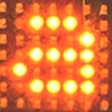
VR art installation "The State of Darkness" explores the experience of co-presence

"The State of Darkness" is a biosensor driven VR art installation where human and non-human narratives coexist; the first experienced by the viewer and the latter experienced by an artificial character Adam B, as they both meet embedded in a virtual reality environment. It is also an experiment in creating an enactive and performative virtual space that creates additional narrative layer in the installation. The piece is experienced with a virtual reality headset and uses biodata of the viewer to modify the content in real-time.
The project is a co-operation between Aalto University’s Virtual Cinema Lab research group and Enactive Virtuality Lab in Tallinn University. The team consists of artists and researchers from Aalto Department of Film, Television and Scenography, Aalto Department of Media, and Tallinn University. It is part of “Enactive Avatar” research project, in which a narratively contextualized enactive character is adopted as an instrument to explore how the viewer’s experience of co-presence can be controlled by parametrically modifying the behavior of the virtual character or its context.
The project was recently chosen to be part of International Conference for Interactive Digital Storytelling (ICIDS) Art Exhibition in Dublin 5-8 December. The installation will also be available for wider audiences in 2019 in Virtual Cinema Lab’s XR Encounters and other events.
People involved:
Idea, Concept, Director: Pia Tikka
Script and Dramaturgical supervision: Eeva R Tikka
Enactive Character design and production pipeline design: Victor Pardinho
Enactive Scenography: Tanja Bastamow
Soundscape: Can Uzer and Iga Gerolin
Technical 3D Artist: Maija Paavola
Symbiotic Creativity: Ilkka Kosunen
Unreal Engine consultation: Paul Wagner and Ats Kurvet
Team funding:
Finnish Cultural Foundation / Huhtamäki Fund
Virtual Cinema Lab at Aalto School of Arts, Design and Architecture
Digidemo Promotion Center of Audiovisual Culture with Oblomovies Oy
EU Mobilitas Pluss Top Researcher Grant (2017-2022)
Estonian Research Council & Tallinn University
Virtual Cinema Lab is a research group in Aalto University's Department of Film, Television and Scenography focusing in creating content for new media technologies.
More information:
International Conference for Interactive Digital Storytelling (ICIDS)
Read more news

Submitting theses for grading as PDF/A files
Theses are to be submitted in PDF/A format, as this ensures their long-term preservation. Use Aalto's thesis templates and carefully check your file's compatibility with a PDF/A format before submission.
Register for the Transregional Online Living Labs Day 2026
Join Unite!’s international, online conference to explore how University Campus Living Labs connect research, education and practice.
VTT, Aalto University and GTK: How to ensure Finland captures the multi‑billion growth potential of mineral economy
Finland is rising to the forefront of the mineral economy through new research initiatives and closer collaboration